
The Day My Niece Raised Her Hand
At the divorce hearing, I sat at the long wooden table in Department 4B, hands folded so tightly in my lap they had gone numb. My husband of forty-two years, Martin Carver, stared straight ahead as if I were a stranger. The judge was reaching for the stack of documents that would end our marriage when a small voice cut through the courtroom.
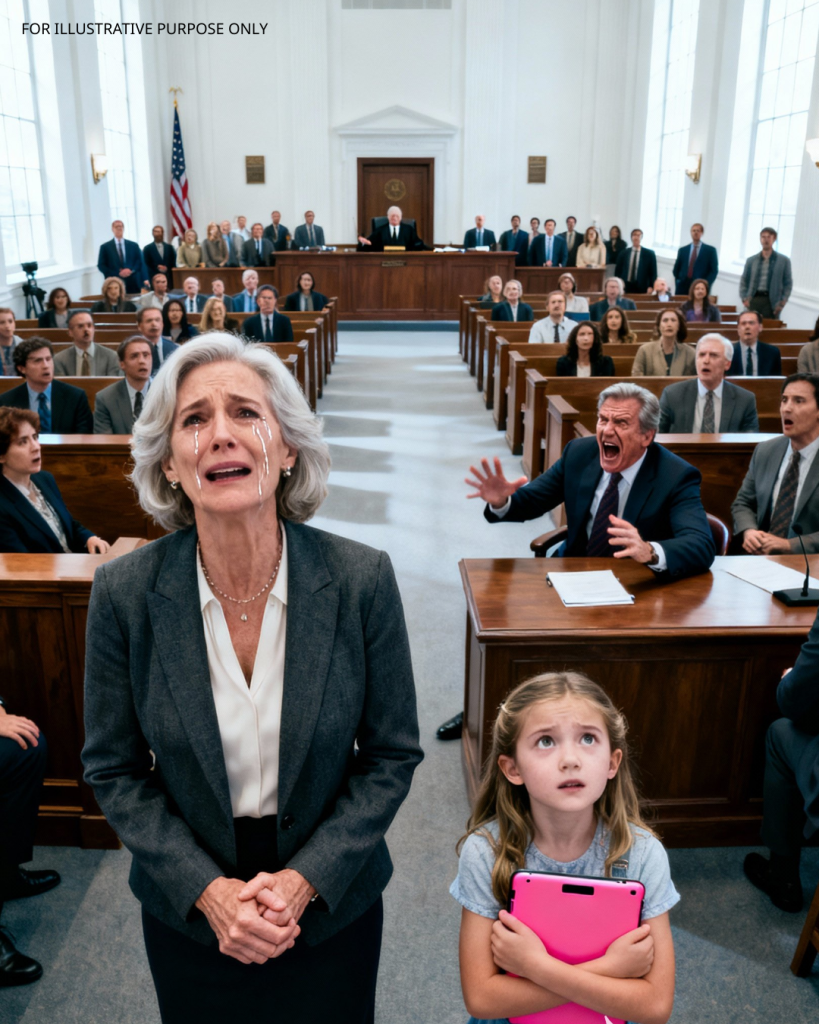
“Your Honor… can you please watch the video I brought?”
Every head turned. My eight-year-old niece, Riley, had slipped out of the spectator row and was standing beside our attorney’s table, clutching a pink tablet to her chest. Her cheeks were flushed, but her chin did not tremble.
“It’s about Uncle Martin,” she said. “And about my Aunt Linda. I think you should see it before you say anything is final.”
The room froze. The judge’s eyebrows lifted. Martin’s hand finally moved—straight to the arm of his chair, tightening hard.
I didn’t know yet exactly what Riley had recorded. I only knew this: for months, I had felt like I was walking through a storm alone. And suddenly, the youngest person in the room was the one reaching out her hand for me.
Three months earlier, the storm had begun with a doorbell.
The Papers on a Tuesday Morning
The divorce papers arrived on an ordinary Tuesday, the kind of morning when the coffee pot gurgles, the local news plays in the background, and you assume your life is steady.
A young courier shifted on our front porch in Maple Creek, Ohio, holding a thick envelope and looking like he wanted to be anywhere else.
“Mrs. Carver?” he asked.
I was still wearing my floral apron, a mug of coffee in one hand and a dish towel in the other. “Yes?”
“I need your signature to confirm delivery.”
I signed, not yet understanding that I was signing for the end of my marriage. When I opened the envelope at the kitchen table, the words blurred before they made sense: Petition for Dissolution of Marriage. Irretrievable breakdown. Separate legal representation.
I read it once, then again. On the third reading, the meaning finally settled in like cold rain.
My husband, Martin—father of our three grown children, the man I had met in a college library, the man I had nursed through pneumonia and celebrated promotions with—had filed for divorce.
No discussion. No counseling. No warning.
My phone rang. His name lit up the screen.
“Martin?” I answered, clinging to the hope that there had been a mistake.
“I’m guessing you’ve seen the paperwork,” he said. His voice was flat. Professional. The same voice he used when he called his office in downtown Columbus to check on quarterly numbers.
“I don’t understand,” I said. “If something was wrong, why didn’t you talk to me? We’ve been planning our retirement. We just talked about driving Route 66 last week.”
“Linda, there’s no point dragging this out,” he replied. “We’ve grown apart. I want something different for the rest of my life.”
“What different? We have a house, grandchildren, friends. What are you talking about?”
“I’ve retained an attorney. You should do the same. If we both stay reasonable, this doesn’t have to be unpleasant.”
My hand shook so badly the coffee in my mug rippled.
“Can you come home so we can talk?” I asked. “Face to face?”
“I won’t be coming back to the house,” he said. “I’m staying at an apartment across town. My lawyer will handle everything from here.”
Then he hung up.
I stood alone in the same kitchen where I had packed his lunches for forty-two years, listening to the refrigerator hum and the old clock tick above the stove, and wondered how many conversations I’d missed while I was seasoning stew and folding laundry.
The Little Girl Who Noticed What I Didn’t
“Are you okay, Aunt Linda?”
Riley’s voice floated in from the back door. My sister Denise had left her with me for the week while she worked double shifts at the hospital. Riley was eight—curious, serious, the kind of child who noticed when a picture frame was crooked or a voice sounded different.
“I’m fine, honey,” I said automatically.
“You don’t look fine.” She climbed onto the chair beside me. “Is it about Uncle Martin?”
I blinked. “Why would you ask that?”
“He’s been acting weird,” she said, lowering her voice as if the walls might listen. “Like when he talks on the phone and stops as soon as you walk in. And when that lady came to the house and he said I shouldn’t tell you.”
The room seemed to tilt.
“What lady, Riley?” I asked carefully.
“The one with the shiny hair and red shoes,” she said. “She came when you were at the grocery store. They went into his office and closed the door. I was in the hall playing my game, but I could still hear them.”
My heart thudded against my ribs.
“What did you hear?” I asked.
Riley frowned, concentrating. “She asked if you knew about some accounts. Uncle Martin said no, that you never asked about investments. He laughed and said you were sweet but didn’t understand ‘big picture money stuff.’”
Each word landed like a stone.
“He also said something about Florida,” she added. “About buying a place there after ‘everything is settled.’ And he told me not to mention her to you because it would ‘just confuse you.’”
I gripped the edge of the table.
“Riley,” I said, choosing my words, “thank you for telling me. If you hear anything else like that, you can always tell me. You’re not doing anything wrong.”
“Will you and Uncle Martin get divorced like the people on TV?” she whispered.
“I don’t know,” I admitted. “But I’m going to find out what’s really going on.”
For the first time since the papers arrived, a thin line of anger slid through the fog. I had spent my entire adult life trusting one man with our future. Maybe it was time to stop trusting blindly.
The Lawyer Who Put It Into Words
The next morning I sat in a small office downtown with a woman whose business card read Angela Brooks, Family Law. Her office was filled with photos of smiling families and shelves of leather-bound books. She offered me tea and a place to set my shaking hands.
“Tell me what happened,” she said.
I described the courier, the call, Martin’s calm tone, and Riley’s description of the woman with shiny hair and secret meetings about money and Florida.
Angela listened without interrupting, then began asking pointed questions.
“How were finances handled in your marriage?”
“Martin took care of investments,” I said. “I managed the everyday bills. I taught third grade for thirty years. He said I didn’t need to worry about retirement funds because he was ‘on top of it.’”
“Do you have access to bank statements? Tax returns? Investment accounts?”
“I see our joint checking account. Most of the other papers are in his home office.”
“Before he changes any passwords,” Angela said, her tone sharpening a little, “I need you to copy or photograph everything you can find—account numbers, statements, letters. If he filed without talking to you, there’s a decent chance he’s been moving assets quietly.”
“Moving assets?” I repeated.
“Hiding money,” she clarified. “Re-titling property, opening accounts in his name only. In long marriages, some spouses decide they’d rather keep the nest egg and leave the partner with as little as possible.”
I stared at her. “He wouldn’t do that,” I said, then heard how uncertain it sounded.
Angela glanced at the notes she’d been taking. “You mentioned your niece overheard a visitor asking about accounts you didn’t know about. That, combined with a sudden divorce filing, is a pattern I’ve seen before.”
“I don’t want to hurt him,” I said softly. “I just don’t want to be blindsided.”
“Holding someone accountable isn’t the same as hurting them,” Angela replied. “You have the right to know what’s been done with money you helped earn and save.”
When I left her office, I still felt like my life had split in two. But now there was a plan, and a name for what I was afraid of.
Evidence in a Desk Drawer
That evening, after Riley fell asleep on the couch with her favorite blanket and a cartoon still playing, I walked down the hall to Martin’s office. I had dusted those shelves for years without really seeing what was on them.
Now I opened drawers.
There were bank statements from institutions I had never heard of. Statements addressed only to him. Transfers I did not recognize. I took photos of everything with my phone, my heart pounding.
In the bottom drawer, under a stack of old conference brochures, I found a cream-colored envelope tucked away.
The letter inside was written in Martin’s neat handwriting.
Lila,
The transfers are almost complete. Linda has no idea about the accounts or the condo. My attorney thinks we can finalize the divorce by fall. Once the house is sold and my separate property claims are secure, we’ll be free to start our life in Clearwater just like we’ve talked about.
Thank you for being patient while I untangle forty-two years. She’s a kind person, but she has never really understood what drives me. You do.
—M
My hands shook so hard the paper rattled.
Forty-two years reduced to a line about “untangling.” Me described as someone who did not “understand what drives him.” A new life in Florida planned with another woman while I was buying groceries and organizing family dinners.
At the bottom of the page, one more line:
Riley was in the hall the other day, but she’s just a kid. She doesn’t grasp adult conversations. No need to worry about her.
I sat back in his chair and stared at the ceiling.
He had misjudged two people at once.
Preparing a Child to Tell the Truth
“Riley,” I said the next morning at the breakfast table, “do you remember when you heard Uncle Martin talking about Florida and money?”
She looked up from her cereal and nodded.
“My lawyer thinks the things you heard are important,” I continued. “But I want to know how you feel about talking to another grown-up about them.”
“Like a teacher?” she asked.
“Kind of. Like a teacher who helps judges make fair decisions.”
She thought for a moment. “Will Uncle Martin be mad at me?”
“He might be upset,” I said honestly. “But if grown-ups do things that aren’t fair, sometimes the right thing is to tell someone who can fix it. That’s not being mean. That’s being brave.”
Riley’s eyes shone with a seriousness that didn’t belong on an eight-year-old, but had been placed there anyway.
“You always help me,” she said. “If this helps you, I’ll do it.”
Angela met with Riley in a quiet room at her office. I sat nearby, listening but not interrupting as my niece described the shiny-haired lady, the whispers about accounts, the mention of using my name on papers I hadn’t seen, and the instructions not to tell me.
Angela asked if Riley had ever recorded anything.
Riley blinked. “You mean like videos?”
“Yes. Sometimes kids record silly things and accidentally capture important things in the background.”
Riley’s face changed. “I did record something,” she said slowly. “The day the lady came, I was pretending to make a movie with my dolls in the hall. I left my tablet on when I went to get a snack. It was still there when they came out of the office.”
Angela’s eyes widened slightly. “Do you still have that video?”
Riley nodded. “I didn’t know if it mattered.”
“It might matter a lot,” Angela said gently.
That night, Riley and I sat on the couch with her tablet between us. The video was shaky and unfocused at first, capturing stripes of carpet and doll shoes. Then, without warning, the sound became clear.
Martin’s voice. Lighter than I’d heard in years.
“If we keep the condo in my name, Linda will never know it exists until it’s too late,” he said.
A woman laughed softly. “You’re sure she won’t ask questions?”
“She still thinks we’re barely comfortable,” he replied. “I’ve been moving money for years in small amounts. By the time we’re done, she’ll walk away with what she thinks is generous, and we’ll have the rest.”
“We,” the woman repeated.
Riley glanced at me, her eyes huge.
“Do you want to stop?” I whispered.
She shook her head and pressed play again.