
Colors don’t just register in our eyes. They land in us. Before we’ve named what we’re feeling, a shade can hit like a memory, a mood, or a warning. That’s why “The first three colors you see reveal the burden you carry” keeps showing up online. It’s not a clinical test, and it won’t replace real mental health work, but as a symbolic exercise it can be surprisingly effective at one thing: making you pause long enough to notice what’s going on inside you.Interior design colors
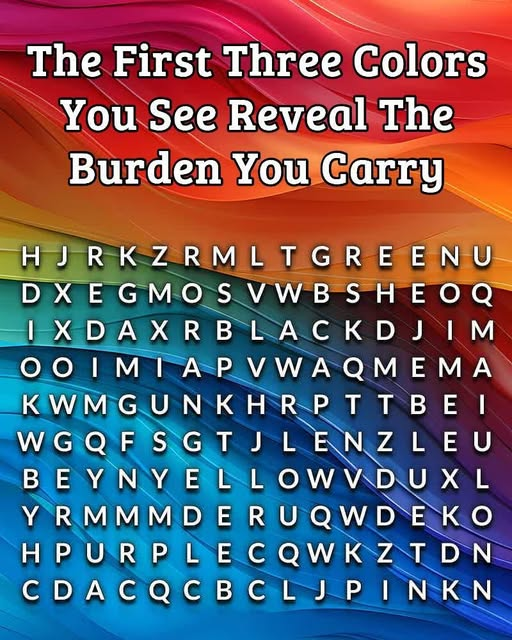
The idea is simple. When you’re shown an image packed with color, or you’re asked to quickly list the first three colors you notice in your surroundings, your brain doesn’t choose at random. Attention is selective. We’re drawn to what stands out, what feels familiar, what feels safe, or what feels urgent. In a split second, you’re not only seeing the world—you’re filtering it. That filter is where the “burden” concept comes in.
A “burden,” in this context, doesn’t have to mean trauma or tragedy. It can be stress you’ve normalized. Pressure you’re carrying quietly. Anger you’ve swallowed for years. The job of this little color game isn’t to diagnose you. It’s to mirror you. If you take it seriously enough to reflect—without turning it into a horoscope—you might recognize patterns you’ve been ignoring.