
A tiny monkey who captured hearts around the world is making important progress.
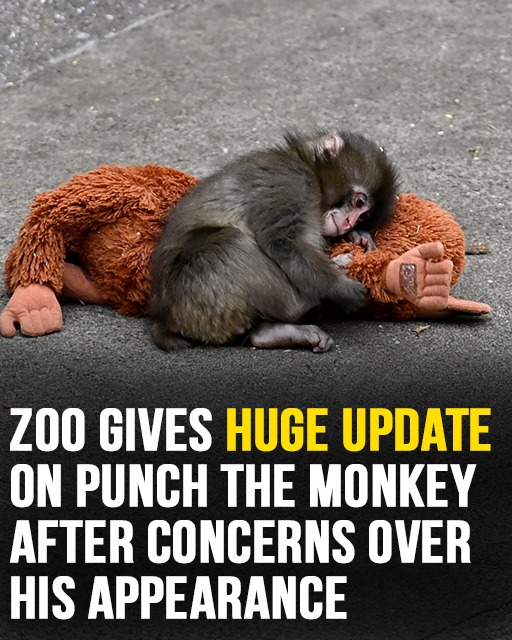
After weeks of viral attention and growing animal welfare discussions, Ichikawa City Zoo has released a new update about Punch, the baby Japanese macaque whose story has become a global wildlife sensation.
From Rejection to Rescue
Punch-kun, affectionately called Punch, was born on July 26, 2025, at Ichikawa City Zoo near Tokyo. Shortly after birth, he was rejected by his mother — a difficult start for any primate, especially a Japanese macaque.
Japanese macaques, often called snow monkeys, form strong maternal bonds. Young macaques typically cling to their mothers for months while learning essential survival behaviors like climbing, social interaction, and foraging. Without that bond, early development can be more complex.
Zoo staff immediately stepped in to provide round-the-clock neonatal animal care and enrichment support.
The Stuffed Orangutan That Went Viral
To help comfort the abandoned infant, caretakers introduced soft enrichment items into Punch’s space. Almost instantly, he bonded with a plush orangutan toy from IKEA.
The tiny macaque was soon seen sleeping, eating, and playing while holding onto the stuffed companion. Photos and videos spread rapidly across social media, turning Punch into an international viral animal story.
Crowds at the zoo increased, and online searches for Japanese macaques and zoo animal welfare surged.
But along with admiration came concern.
Viral Video Sparks Welfare Questions
In mid-February, a video showed Punch being pulled by an adult macaque inside the enclosure. After the interaction, he ran to his stuffed toy and held it tightly before retreating to a quieter area.
Some viewers interpreted the moment as bullying and raised questions about zoo animal management.
However, the zoo explained that the behavior was part of natural troop integration.
According to statements shared with People, caretakers had anticipated challenges while introducing Punch into the Japanese macaque troop.
Understanding Primate Social Behavior
Zoo officials emphasized that what may look harsh to human observers can actually be normal “social correction” within macaque hierarchies.
“In order to integrate Punch into other Japanese monkey troops, we anticipated that this kind of challenge may arise,” the zoo said.
Caretakers added that Punch has shown resilience during this transition period.
“While Punch is scolded, he shows resilience and mental strength,” officials explained. “We hope people will support his efforts rather than feel sorry for him.”