
Global security concerns intensified this week after Iran issued a firm response to the United States during an emergency session at the United Nations, following coordinated U.S. and Israeli airstrikes.
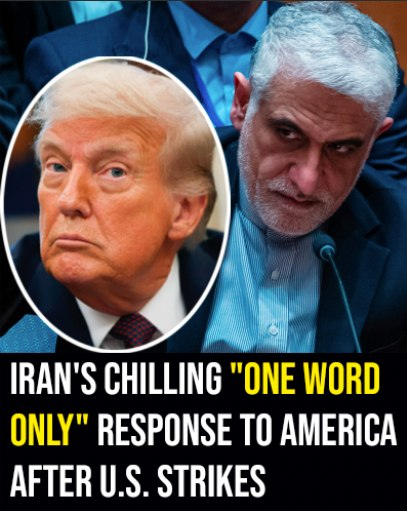
The strikes came after stalled nuclear negotiations and targeted senior Iranian leadership at a compound in Tehran. Multiple international outlets reported that Iran’s Supreme Leader, Ayatollah Ali Khamenei, and four family members were killed. Israeli officials also stated that President Masoud Pezeshkian was among those targeted.
U.S. Statement and Military Operation
Following the operation, former U.S. President Donald Trump posted a strong warning on Truth Social, stating that Iran would “never have a nuclear weapon” and vowing to dismantle its missile capabilities. He added that Iran should “lay down your arms or face certain death.”
The United States maintains that the strikes were intended to prevent further nuclear development and reduce regional threats. According to statements cited by The New York Post, Iran subsequently announced what it described as the “first wave of extensive missile and drone attacks” across Israel and signaled preparations for possible strikes on U.S. bases in the region.
Iranian state media warned of a large-scale military response, while the Fars News Agency described plans for what it called one of the most significant offensive operations in the country’s history.
Escalating Rhetoric From Both Sides
Iran’s parliament speaker, Mohammad Bagher Qalibaf, strongly condemned U.S. and Israeli leadership, accusing them of crossing a “red line” and promising severe retaliation.
In response to Iran’s statements, Trump issued another warning, saying the United States would respond with unprecedented force if Iran escalated further. Both sides indicated the confrontation could intensify and potentially last for weeks, raising concerns among defense analysts and global markets.
“I Have One Word Only” – UN Confrontation
During an emergency meeting of the United Nations Security Council, Iran’s ambassador, Amir Saeid Iravani, sharply criticized the airstrikes. According to coverage by United Nations News, he argued that the attacks violated international law and did not meet the legal standards for self-defense under Article 2 of the UN Charter.
Iran invoked Article 51 of the UN Charter, which permits self-defense, pledging to respond “without hesitation.”
At one point during his remarks, Iravani addressed the U.S. delegation directly, stating: “I have one word only… I advise the representative of the United States to be polite. It will be better for yourself and the country you represent.”
The U.S. ambassador, Mike Waltz, responded that he would not engage further with the remarks and defended the U.S. position, arguing that the operation was necessary to counter what Washington views as ongoing threats.
Legal and Diplomatic Fallout
Iravani went on to label the operation an act of “premeditated aggression,” calling it a breach of the UN Charter and rejecting claims that it was a lawful preemptive strike. He described the justification as legally and politically unfounded.
The United States, however, maintains that the airstrikes were a preventive measure aimed at stopping potential nuclear weapons development and protecting global security.
Meanwhile, UN Secretary-General António Guterres expressed deep concern over the escalating conflict. He condemned both the airstrikes and retaliatory actions, warning that the situation represents “a grave threat to international peace and security.” He emphasized that diplomatic solutions remain the only viable path forward.
Global Impact and Geopolitical Risk
The confrontation has triggered widespread concern among geopolitical analysts, defense experts, and financial markets. Energy prices, cybersecurity risk, and military readiness across the Middle East are now under heightened scrutiny.
While rhetoric from both sides has intensified, international observers continue urging restraint to prevent further destabilization in an already volatile region.
As global diplomacy efforts unfold, the situation remains fluid — with world leaders closely monitoring developments that could shape international security, defense strategy, and global economic stability in the weeks ahead.