
Nearly six years after Jeffrey Epstein’s death in federal custody, speculation abounds over what information might be in transcripts and other documents related to investigations of the wealthy financier who was a convicted sex offender and accused of sex trafficking young women and girls as young as 14.
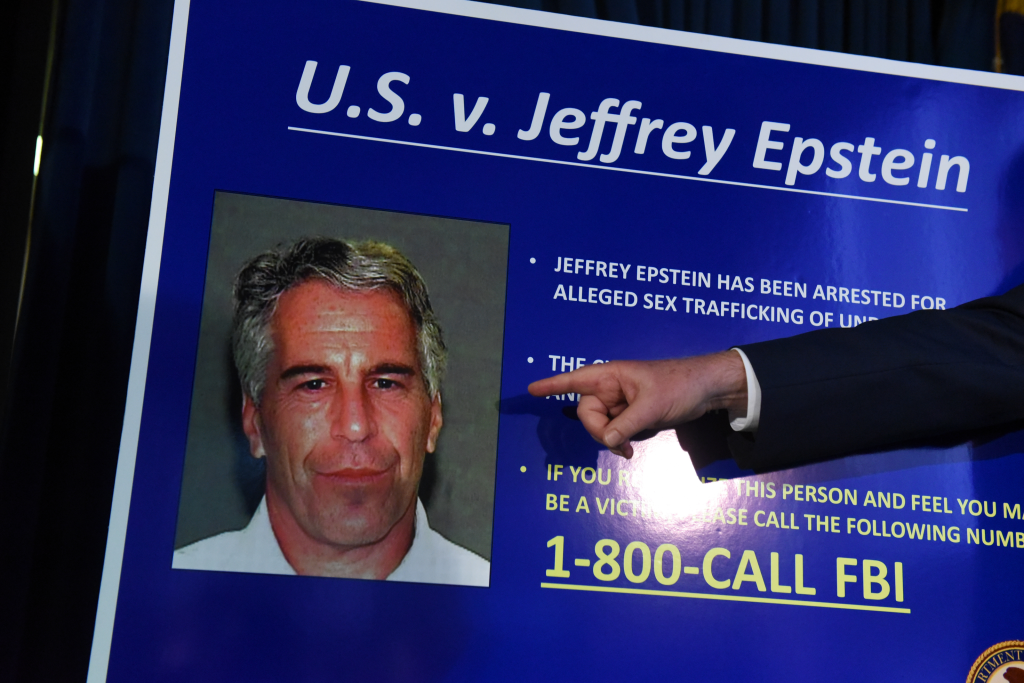
The Trump administration is under increasing pressure to release “the Epstein files” — a call that President Trump has sometimes joined, even as his own ties to Epstein come under renewed scrutiny.
In a process spanning decades, criminal cases against Epstein culminated in charges that he operated a sex-trafficking ring preying on young women and underage girls. Prosecutors say he was aided by Ghislaine Maxwell, his long-time associate who is currently in prison.
But while thousands of pages of depositions and other legal documents have been filed — and some have been released — public calls have grown for a release of all the files.
Interest in the case has persisted along with the perception that Epstein used his wealth and elite status — hosting powerful people on private jets and socializing in Palm Beach, Fla., New York, London and a Caribbean island — not only to commit heinous crimes, but to avoid responsibility for them.
Here’s a brief timeline of the legal cases against Epstein:
2005
March: Police open a criminal investigation into Epstein in Palm Beach, Fla., after a 14-year-old girl’s parents say he paid her for a massage.
Police gather more allegations from underage girls who say he sexually abused them at his mansion, in encounters that often began as massages. Federal prosecutors later say the abuse began as early as 2002.
2006
July 19: A Palm Beach County grand jury indicts Epstein on one state felony charge of solicitation of prostitution. But the Palm Beach Police Department’s chief and lead detective then refer the case to a nearby FBI office, saying the charge doesn’t reflect “the totality of Epstein’s conduct,” according to the Justice Department’s review of the case.
2007
May: An assistant U.S. attorney — who has been working with two FBI agents to find more victims — submits a draft indictment outlining 60 criminal counts against Epstein, along with a memo summarizing the evidence assembled against him.
July: Epstein’s attorneys meet with the U.S. Attorney’s Office for the Southern District of Florida. The top prosecutor was then-U.S. Attorney Alex Acosta (who in 2017 would become President Trump’s Labor Secretary). The U.S. Attorney’s Office offers to end its investigation if Epstein pleads guilty to two state charges and agrees to accept a prison term, register as a sexual offender, and set up a way for his victims to obtain monetary damages.
The much-criticized deal includes a controversial nonprosecution agreement, or NPA, in which the federal prosecutor’s office grants immunity to Epstein, four co-conspirators, and “any potential co-conspirators,” the Justice Department says. Prosecutors agree not to tell Epstein’s victims about the NPA, which is filed under seal.
2008
June 30: Epstein pleads guilty to state charges of solicitation of prostitution and of solicitation of prostitution with a minor under the age of 18 — and is sentenced to 18 months in a minimum-security facility.